

Most people assume loan management software is a problem that’s already been solved. It has, but only for banks with six-figure IT budgets. For the credit union manager juggling 300 active loans, or the microfinance officer tracking repayments through a WhatsApp group, the options have been grim: clunky legacy software, expensive enterprise platforms, or a patchwork of spreadsheets held together by prayers and manual formulas.
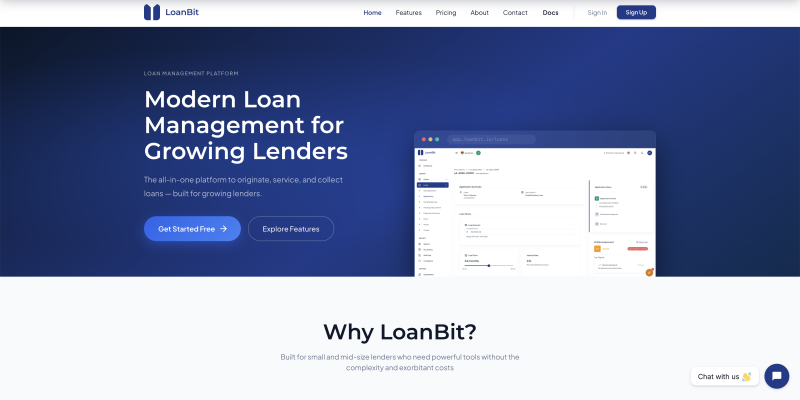
LoanBit is a loan management platform built specifically for small and mid-size lenders. It covers the full lending lifecycle in a single product: origination, servicing, payments, collections, disbursements, and reporting. No modules to bolt on, no separate integrations to wire up before you can get started.
What makes it worth paying attention to is the combination of price and scope. This is not a watered-down tool. It handles AI risk scoring, automated repayment schedules, KYC document management, compliance audit trails, and real-time portfolio dashboards. The free plan supports up to 50 active loans, which is genuinely useful for a lender just getting organized.
Key Features of LoanBit
Loan Origination and Application Flow
LoanBit guides lenders through the entire intake process: application collection, document upload, approval routing, and loan product configuration. The flow is structured, so nothing falls through the cracks between intake and disbursement. Small teams can run a professional application process without a dedicated ops person managing the pipeline.
AI Credit and Risk Scoring
Available on Growth and higher plans, the AI risk engine automatically scores each loan application based on repayment history, income ratios, and exposure levels. It also runs a nightly scan across the portfolio to flag anomalies, including late payment trends and score drops. This kind of early warning capability used to require either a data analyst or an expensive enterprise platform.
Automated Loan Servicing
Once a loan is active, LoanBit handles repayment schedule generation, interest calculations, maturity tracking, and restructuring options. Payment reminders go out automatically. Delinquencies get flagged. The system manages the administrative workload that typically consumes most of a loan officer’s week.
Reporting, Accounting, and Compliance
The platform includes a pre-built report library covering arrears, collections, officer activity, and loan status, all exportable to CSV. On the financial side, there’s a transaction ledger, cash flow summaries, income reports, and journal exports. Role-based access controls and a full audit trail handle compliance and accountability needs without requiring a separate tool.

Maria’s Monday Morning, Before and After
Maria runs a small community lending fund in Nairobi with around 180 active borrowers. Every Monday morning at 8:30 a.m., she used to spend 90 minutes pulling together her weekly arrears report: opening three separate spreadsheets, cross-referencing a WhatsApp message thread for weekend payments that came in, recalculating interest manually for two loans that had been restructured mid-term, and assembling a summary for her two loan officers.
After switching to LoanBit, that Monday morning task takes about ten minutes. She opens the dashboard, pulls the arrears report with a single click, checks the automated payment reminders that went out over the weekend, and reviews the AI anomaly alerts for any accounts the system flagged overnight. One of those alerts caught a borrower whose repayment pattern had shifted, something Maria admits she probably would not have noticed until the loan was already two months overdue.
The specific outcome: she recovered that loan through early contact and a short restructuring conversation. Under the old system, it would have become a write-off. The time she used to spend on Monday morning administration now goes into new loan assessments. Her portfolio grew by 40 loans in the three months after onboarding, without adding any staff.
How LoanBit Handles the Lending Workflow
Step 1: Set Up Loan Products
You configure your loan types inside the platform, including interest rates, repayment structures, and document requirements. This takes maybe 30 minutes for a typical small lender and only needs to happen once per product type.
Step 2: Intake and Approve Applications
New applications come in through the guided intake flow. Documents are collected and attached to the borrower profile. If you’re on the Growth or Pro plan, the AI risk score appears automatically alongside the application for review.
Step 3: Disburse and Service
After approval, LoanBit generates the repayment schedule and begins managing the loan lifecycle. Payments are recorded, reminders go out on schedule, and the portfolio dashboard updates in real time.
Step 4: Monitor and Report
The report library and portfolio risk dashboard give lenders a live view of performance. Anomaly alerts surface potential problems before they become serious. Compliance and audit logs are maintained automatically in the background.

LoanBit Pricing
LoanBit currently offers four tiers, with early access pricing locked in before billing starts July 1, 2026:
- Free: $0/month, up to 50 loans, 1 staff user, 500 MB storage
- Growth: $79/month, up to 3,000 loans, 3 staff users, AI risk scoring included
- Pro: $149/month, up to 6,000 loans, 10 staff users, full AI suite, multiple branches
- Scale: $289/month, unlimited loans, unlimited users, custom integrations, enterprise SSO
The free plan is a genuine starting point, not a stripped teaser. For a solo lender or a very small microfinance team, it covers the core workflow without a time limit.
Who Should Give LoanBit a Look
If you run a credit union, microfinance institution, community fund, or private lending operation and you’re still relying on spreadsheets or a cobbled-together mix of tools, LoanBit is worth a serious evaluation. The free plan costs nothing and takes minutes to set up. The paid tiers are priced for real small-business budgets, not bank IT departments. You can start at loanbit.io and try the interactive demo before committing to anything.