




There is a dirty secret sitting inside most insurance agency and mortgage broker pipelines: a significant chunk of the leads reps dial every morning were never worth calling in the first place. Disconnected numbers, duplicate records from last month, TCPA-exposed contacts, and form submissions with fake data all get treated like real opportunities. Reps burn their best hours sorting trash from treasure, and conversion numbers stay flat even as lead spend climbs.
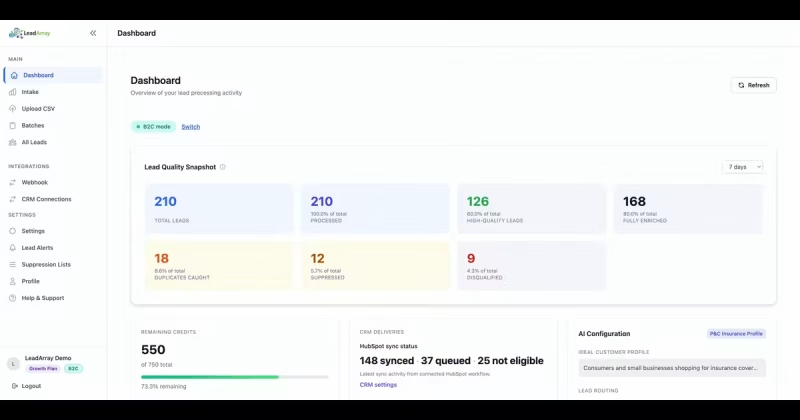
LeadArray is a lead intelligence platform built specifically for teams in insurance, mortgage lending, and legal intake. It sits upstream of your dialer and CRM, processing every incoming lead through a 10-step pipeline: normalize, deduplicate, suppress, validate, compliance-scan, enrich, score, summarize, route, and deliver. By the time a lead reaches your rep, the work is already done.
Founder Piaget Jenkins spent years in B2B SaaS product development and pre-sales watching revenue teams stitch together enrichment tools, validation services, and manual CRM workflows just to make raw leads usable. LeadArray was built to solve that problem at the source, not after the fact.
Key Features of LeadArray
Contact Validation and Phone Grading
Every phone number gets an A-F contact grade, a real-time activity score, and a line-type classification (mobile, landline, or VOIP). LeadArray also confirms the submitted number actually belongs to the name on the form, catching transposed digits and placeholder numbers before any rep picks up the phone. Emails go through deliverability verification and name-match checks too. Bad contact data gets flagged before it ever enters your queue.
DNC and TCPA Compliance Screening
Every lead is scanned against DNC registries (federal and state), checked for TCPA consent and channel permissions, and cross-referenced against a litigant and complaint database. This runs automatically, before the lead touches your CRM or dialer. For insurance agencies buying from aggregators like EverQuote or MediaAlpha, this matters a lot. Consent rules keep tightening, and a lead bought yesterday can become a compliance problem next year if you are not screening properly.
AI-Powered ICP Scoring and Summaries
LeadArray scores every lead against your defined ideal customer profile and assigns a custom priority tier. Each lead also gets an AI-generated summary explaining why it matters and how to engage. One early user on Product Hunt noted the ICP scoring was tighter than what their SDRs were doing manually. That is a meaningful benchmark.
Real-Time Routing and Hot Lead Alerts
High-scoring leads route instantly to your dialer queue or CRM. The hottest ones trigger real-time alerts via Slack or Microsoft Teams, with the AI summary attached, so reps have full context within seconds of a lead coming in. Native integrations include HubSpot, Salesforce, and GoHighLevel; pass-through integrations include Kixie, Convoso, and PhoneBurner. Teams using this approach report a 20% lift in contact rates and 35% less wasted rep time, according to LeadArray’s own benchmarks.

A Tuesday Morning at an Independent P&C Agency
Marcus runs a five-person independent P&C agency in Texas. Every Tuesday at 8:00 AM, his two producers sit down with a fresh batch of leads bought from EverQuote the day before. Before LeadArray, this meant about 45 minutes of manual sorting: checking for duplicate names, trying to identify which numbers were VOIP burners, and flagging anything that looked like a fake submission. By the time they were actually dialing, it was nearly 9:00 AM and the morning’s best calling window was already shrinking.
After connecting LeadArray to his EverQuote feed via webhook, the same batch of leads now arrives in his dialer queue fully processed via LeadArray. One recent Tuesday, 47 leads came in overnight. LeadArray had already flagged 11 as disqualified (disconnected numbers, DNC matches, or mismatched identity), removed 3 duplicates, and ranked the remaining 33 by contact grade and ICP score. By 8:05 AM, both producers had a sorted, compliant call list and a Slack notification about the two highest-priority leads, including an AI note on each one explaining the homeowner status and prior carrier context. Marcus said his team closed two policies before 10:30 AM that day. Previously, those leads would have been buried in the pile.
How LeadArray Processes a Lead From Intake to Dialer
Step 1: Ingest
Leads arrive via webhook, API, CSV upload, or inbound email. Single records and bulk batches are both supported. LeadArray accepts feeds from a wide range of sources — paid social, search, marketplace, aggregator, and direct web forms — and normalizes them into one canonical format regardless of origin.
Step 2: Clean and Deduplicate
Raw input is normalized. Exact and fuzzy duplicate detection runs against your full account history. No credits are charged for blocked or duplicate leads — you only pay for leads worth working.
Step 3: Compliance Scan
Before a lead is scored or routed, it’s screened against DNC, known litigators, and your suppression lists. Leads you legally shouldn’t touch get flagged and held back at intake — not after your team has already dialed them. This runs first, so nothing downstream wastes a rep’s time or exposes you to TCPA risk.
Step 4: Validate, Enrich, and Score-and-Rank
Contact info is verified and missing fields are appended (homeowner status, income band, length of residence, property data). Each lead is scored against your ICP, then ranked relative to every other lead in the queue — so your dialer works the best ones first instead of top-to-bottom.
Step 5: Recommend, Route, and Deliver
Each lead arrives ready to work: best contact method and timing, plus an AI-composed opening SMS or email. Clean, ranked leads push directly to your CRM or dialer queue, and hot leads trigger instant Slack or Teams alerts. Every lead carries a plain-language explanation of why it scored the way it did and why it routed where it did — the audit trail your operators and compliance reviewers can point to. The whole pipeline runs in 30 seconds or less per lead.

LeadArray Pricing
There are four tiers:
- Pilot at $59/month: 100 leads included, 1 user, basic enrichment, AI scoring, CSV and HubSpot export
- Starter at $249/month: 400 leads included, 5 users, DNC/TCPA signals, Slack/Teams hot lead alerts, auto CRM routing
- Growth at $599/month: 750 leads included, 10 users, Salesforce integration, API access, lead source quality ranking
- Enterprise at custom pricing: unlimited users, unlimited AI profiles, managed operations, dedicated success manager
No long-term contracts on any plan. Overage rates drop as you scale, from $0.75 per lead on Pilot down to $0.55 on Growth. A Product Hunt launch discount is active: use code 2026PHQ2 for 25% off your first month.
Worth a Serious Look If You Buy Leads
If your producers, loan officers, or intake coordinators spend any part of their morning sorting through lead lists rather than dialing, LeadArray addresses exactly that problem. It is purpose-built for insurance agencies, mortgage brokers, and legal intake teams, not a generic B2B enrichment tool repurposed for these verticals. The compliance screening alone is worth evaluating, given how aggressively TCPA enforcement has ramped up. You can request a free lead audit at leadarray.ai with no commitment required, and results come back within two business days.