



Most karaoke apps have a problem. They want your credit card on a recurring basis, they limit you to their song catalog, and they fall apart the moment your Wi-Fi flickers. Jonathan Vargas, a solo indie developer, got fed up with exactly that situation and built something different. Beltr is an AI-powered karaoke app that strips vocals from any MP3 you already own, displays synced lyrics on your TV, and lets guests join as wireless remotes by scanning a QR code. No subscription. No catalog restrictions. No cloud dependency.
The pitch is simple: drop your music files in, wait 30 seconds for the AI to remove the vocals, and start singing. It runs entirely offline, which means your house party does not grind to a halt because your router is having a moment. The one-time price is $19.99, and that is it forever.
What makes Beltr genuinely interesting is the combination of things it does well at once. Offline AI processing, phone-as-remote functionality, real-time pitch scoring, and lyrics generation all in a single desktop app. That is a lot for a one-person project.
What Beltr Actually Does: Key Features
AI Vocal Removal That Runs Locally
Beltr uses Meta’s Demucs v4 model to separate vocals from any MP3, FLAC, or WAV file. The processing happens entirely on your machine. Your music never touches a server. Most songs are ready in about 30 seconds, depending on your hardware. The minimum spec is 8 GB of RAM, which is standard on most computers sold in the last several years.
Phones as Wireless Remotes
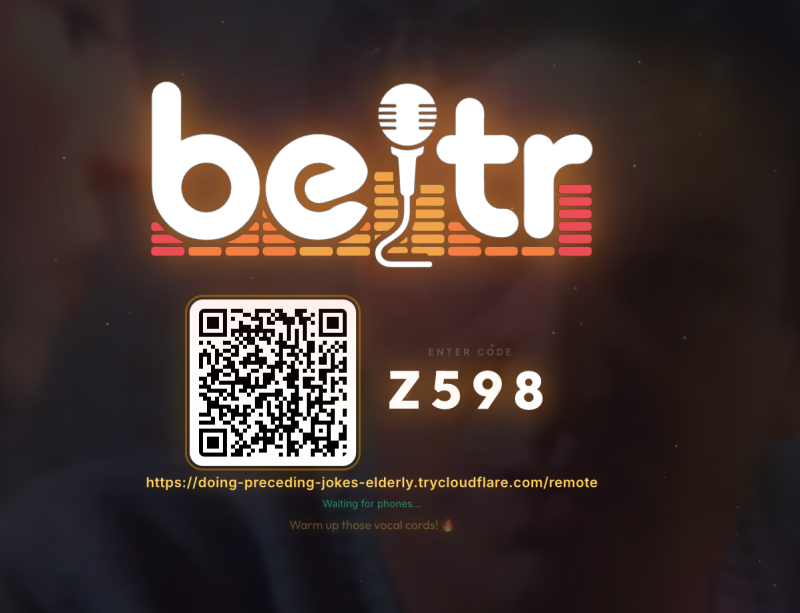
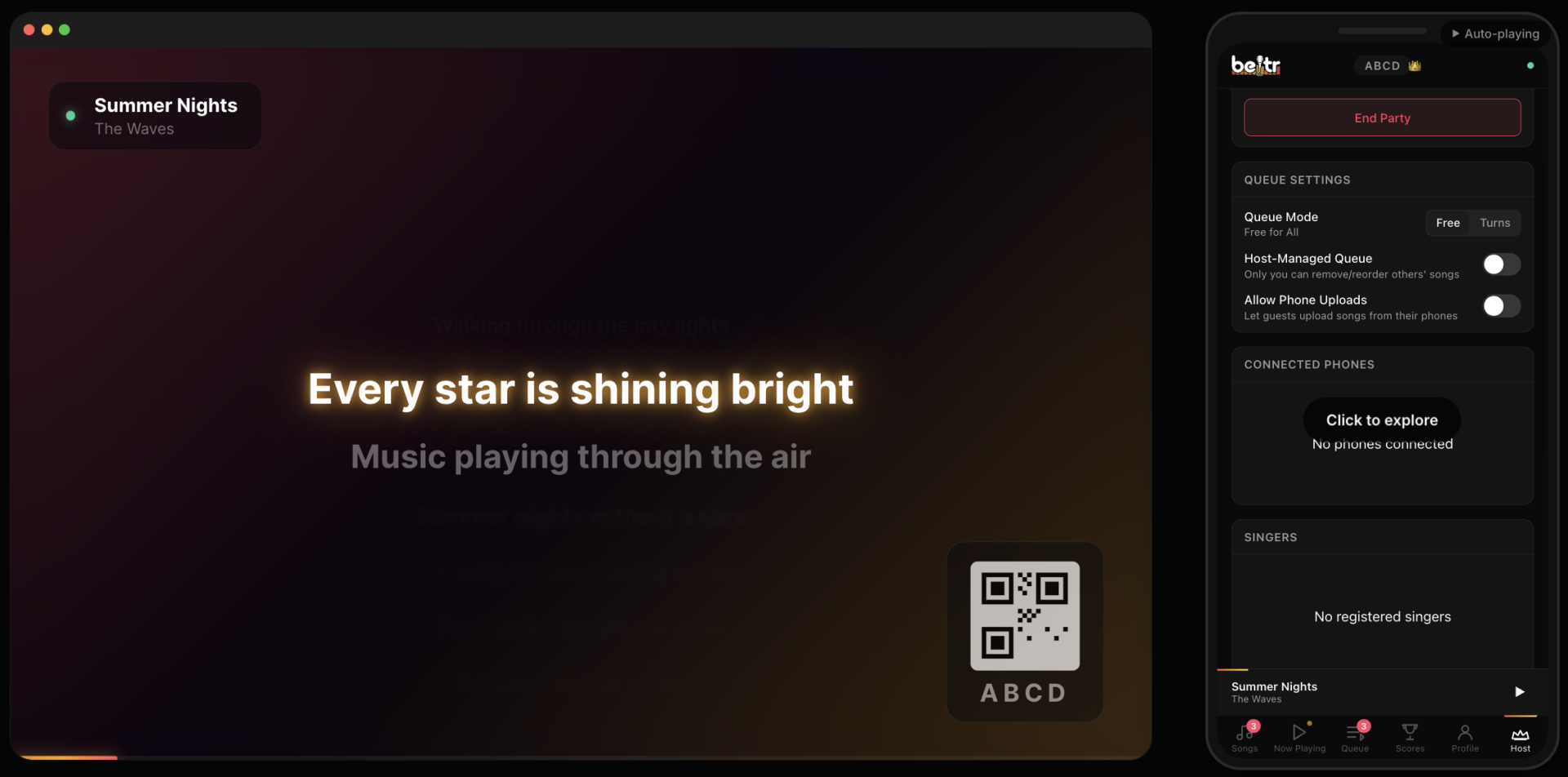
Guests scan a QR code displayed on the TV screen. Their phone becomes a remote immediately, with no app download and no account creation required. From their phone they can browse your song library, queue up tracks, and vote on what plays next. It is the kind of detail that makes a house party actually work without someone hovering over a laptop all night.
Synced Lyrics and Real-Time Scoring
Lyrics are displayed word by word on the TV, synced to the music. Beltr pulls lyrics from online sources when available, and if it cannot find them, it generates them locally using AI. On top of that, there is real-time pitch scoring with leaderboards, so things get competitive fast. You can also transpose the key to match a singer’s range, which is a practical touch that most apps skip entirely.
4-Stem Mixer for Flexible Practice
Beyond full vocal removal, Beltr includes a four-stem mixer that lets you fade the vocals partially rather than cutting them completely. This is useful for practice sessions where someone wants the original voice as a guide, or for moments during a performance where you want a bit of backup. It adds real flexibility without complicating the main use case.
Saturday Night at Marcus’s Place
Marcus, a 34-year-old teacher in Austin, had been hosting a monthly get-together for his friend group for two years. He always wanted to add karaoke but kept bouncing off the subscription apps. Karafun wanted $13 a month and only offered its own catalog. He owned hundreds of songs in his personal library and none of them were available.
At around 7:30 PM on a Saturday, two hours before guests arrived, Marcus downloaded Beltr and dropped in 20 MP3s from his collection. By 7:45, all 20 tracks had been processed. He connected his laptop to the TV via HDMI and the QR code appeared on screen automatically.
When guests arrived at 9:30, he pointed at the TV and said “scan that.” Within two minutes, six people had their phones connected and were queuing songs. Nobody installed anything. His friend Priya, who swore she never sings at karaoke, ended up doing three songs back to back once she saw her pitch score climbing. The leaderboard caused exactly the kind of chaos Marcus had been hoping for.
The internet went out briefly around 10 PM, as it tends to do. Beltr kept running without a hiccup. Marcus called it the best forty dollars he has spent on hosting all year, then remembered it was actually twenty.
How Beltr Works: From File to First Song
Step 1: Download and Install
Beltr is available for macOS (Apple Silicon), Windows (64-bit), and Linux (AppImage and .deb). Download is free, and five songs are included with no credit card required. The app is currently at version 1.7.12 and is under active development.
Step 2: Drop Your Music Files
Drag and drop MP3, FLAC, or WAV files into the app. Beltr queues them for processing automatically. The Demucs v4 model runs locally on your machine, which means no uploads and no waiting on a remote server.
Step 3: Connect Your TV and Guests
Connect your computer to a TV via HDMI or a screen-sharing tool. The app displays a QR code on screen. Guests scan it from any phone browser. No app install, no sign-in. They join immediately as remotes and can queue songs, browse the library, and vote on what plays next.
Step 4: Sing
Lyrics appear on the TV in real time, synced word by word. Pitch scoring runs live. Adjust the key if needed. That is genuinely the whole process.
Pricing: One Time, No Surprises
Beltr costs $19.99 as a one-time purchase during the current launch period. The regular price is $29.99. Five songs are included in the free trial, no credit card required. One license covers your personal devices. For comparison, Karafun charges $13 per month, which adds up to over $150 per year for a catalog you do not own and software that stops working if you stop paying.
Who Should Try Beltr
If you host parties, own a music collection, and have been avoiding karaoke apps because of monthly fees or limited song catalogs, Beltr is worth a serious look. It is also a strong pick for anyone who needs something that works offline reliably. Download the free trial at beltr.app and put your first five songs through it before spending a dollar. Chances are you will not need much convincing after that.