

Most content teams are still playing a single-engine game. They optimize for Google, track rankings, and call it done. But search behavior has shifted quietly and quickly. A growing slice of buyers, especially in B2B, now ask ChatGPT or Perplexity which tools to consider before they ever open a browser tab. If your brand isn’t mentioned in those AI responses, you simply don’t exist to those buyers.
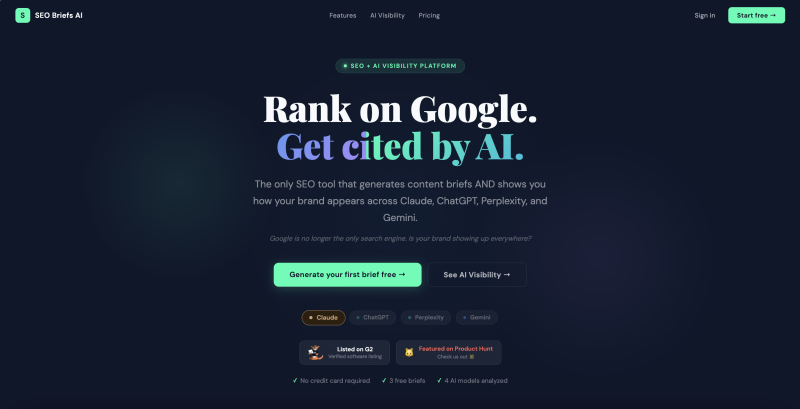
SEO Briefs AI is a platform built for exactly this moment. SEO Briefs AI sits at the intersection of traditional search and emerging AI-driven discovery.
It generates structured SEO content briefs in seconds, while also measuring how visible your brand is across leading AI systems like ChatGPT, Claude, Perplexity, and Gemini. This dual capability reflects a broader shift: content is no longer just competing for Google rankings, but for inclusion in AI-generated answers. That combination is still rare in the current market.
Founder Siegfred built it after spending roughly two hours every time he needed to brief a writer. That’s a familiar tax for anyone running a content operation. The AI visibility layer came from a sharper observation: A growing number of B2B buyers are now using AI tools like ChatGPT and Perplexity to shortlist vendors. Brands that aren’t showing up in those answers are losing deals they never knew were on the table.
Key Features of SEO Briefs AI

30-Second Content Brief Generation
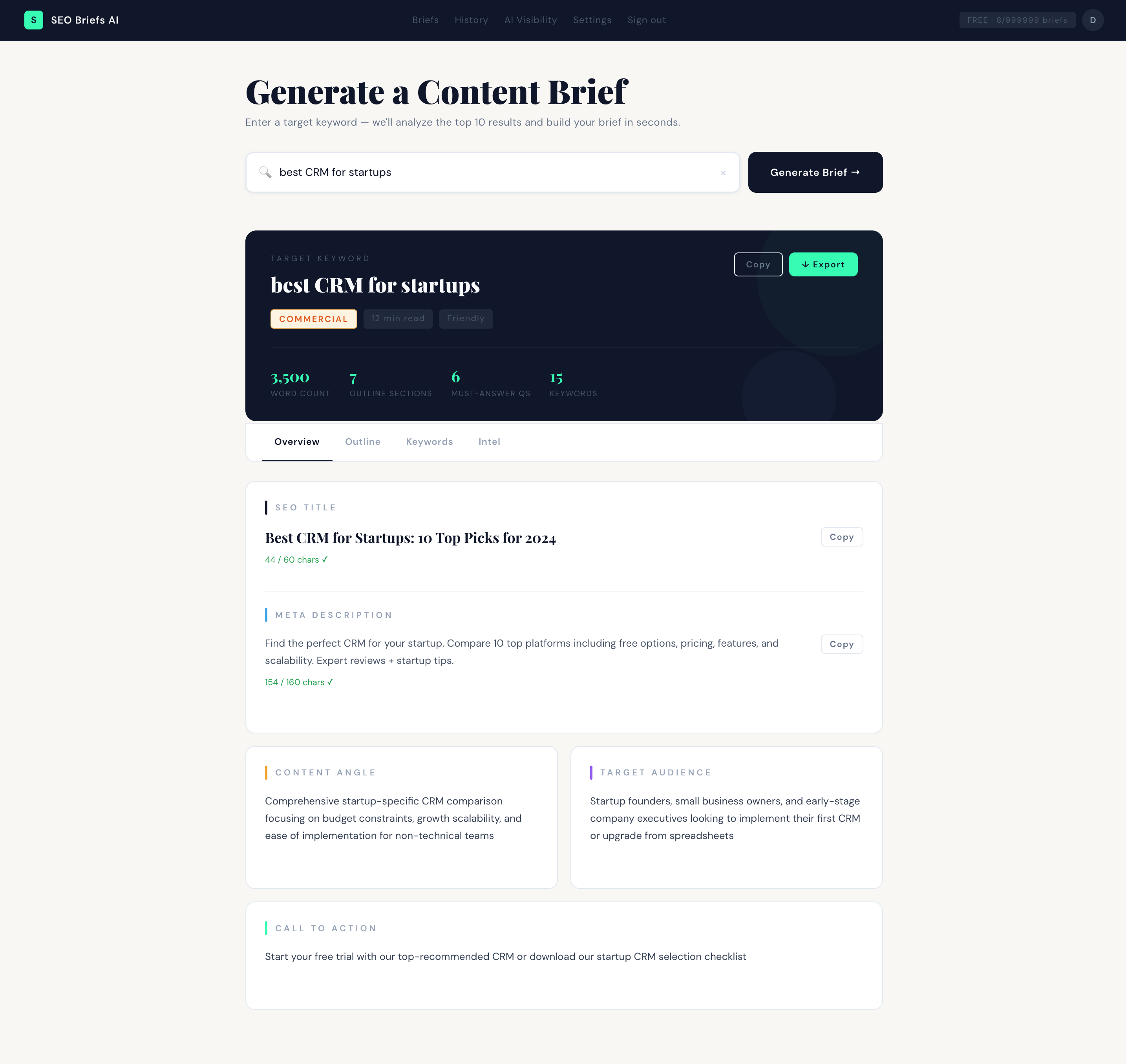
Type any keyword and the tool scans Google’s top 10 results, pulling titles, headings, word counts, and content gaps. The platform’s AI engine then generates a structured brief with an exact word count target, full H2/H3 outline, search intent classification, and the must-answer questions your article needs to cover. You can hand it directly to a writer without touching it.
AI Visibility Scoring Across Four Models
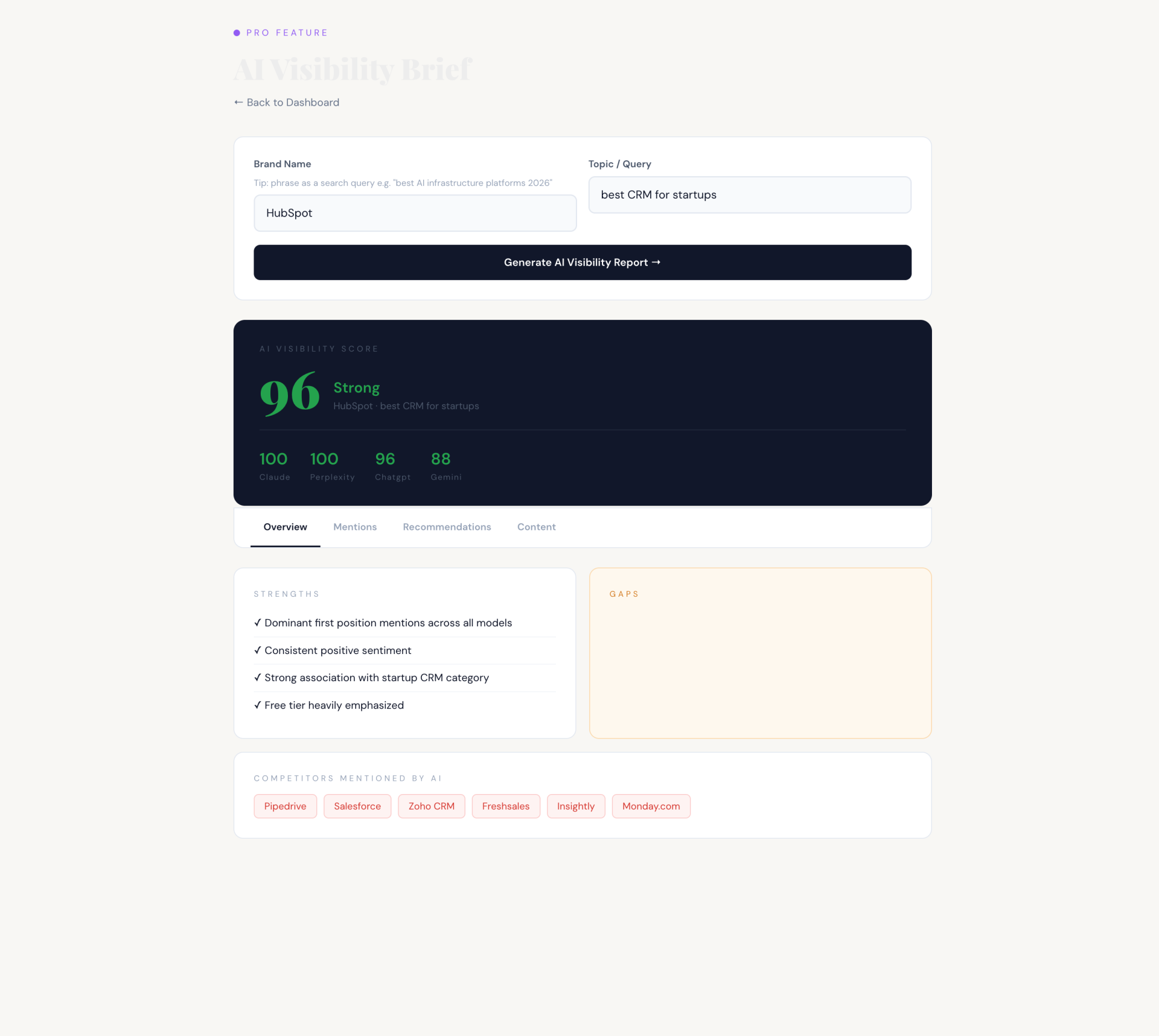
This is the part that makes SEO Briefs AI genuinely different. Enter your brand name and a topic, and the platform queries Claude, ChatGPT, Perplexity, and Gemini simultaneously, with multiple passes per model to ensure more consistent results. You get a score per model, a breakdown of where you’re mentioned, competitor names that do appear, and a top recommendation for closing the gap. A score of zero on even one model means you may be missing a meaningful portion of AI-driven discovery.
Search Intent Analysis
Before you write a single word, you need to know why someone is searching. The tool classifies intent automatically, commercial, informational, navigational, and surfaces the angle your content needs to take. This saves the back-and-forth between writer and editor that usually eats up another hour.
Competitor Gap Detection
The AI visibility report doesn’t just score your brand. It tells you which competitors the AI models are recommending instead of you. That competitive intelligence shapes what content to publish next, whether that’s a comparison piece, a structured data update, or a direct answer to a question where rivals keep appearing.
Marcus at 9am: A Brief That Would Have Taken Two Hours
Marcus runs content for a mid-size SaaS company selling project management software. Every Monday morning at 9am, he opens a fresh doc and starts the grind: Google the target keyword, open the top ten results in separate tabs, compare heading structures, estimate word counts, guess at what questions to answer. On a good week it takes 90 minutes. On a bad one, it bleeds into the afternoon.
Last Monday he tried SEO Briefs AI instead. He typed “project management software for remote teams” and hit generate. In under 30 seconds he had a brief with a 2,800-word target, a seven-section H2/H3 outline, six must-answer questions pulled from the competitive landscape, and a confirmed search intent: commercial, comparison-focused, targeting team leads rather than executives.
He sent it to his writer by 9:08am. The brief was more specific than anything Marcus had built manually. The writer came back with zero clarifying questions, which is the real measure of a good brief. That afternoon, Marcus ran an AI visibility report on his brand for the keyword. His score on Perplexity was zero. The report flagged three competitors filling that space and suggested publishing a comparison article with structured data markup. He added it to the sprint.
How SEO Briefs AI Builds Your Brief and Visibility Report
Step 1: Enter Your Keyword or Brand
For a content brief, type the keyword you’re targeting. For an AI visibility report, enter your brand name alongside the topic or query you want to rank for.
Step 2: The Platform Does the Analysis
For briefs, the engine scans Google’s current top 10 results and extracts structural and content signals. For visibility reports, it sends your query to all four AI models simultaneously, queries each model multiple times to build a more consistent and reliable view.
Step 3: Get Your Output
Briefs arrive with a target word count, full outline, intent tag, must-answer questions, and a suggested SEO title. Visibility reports arrive with per-model scores, sentiment notes, competitor mentions, and a concrete content recommendation. Both outputs are export-ready.
Who Should Try SEO Briefs AI
If you’re a content manager, freelance writer, or marketing lead who briefs writers regularly, the time savings alone make it worth testing. The free plan includes three briefs with no credit card required, so there’s no friction to getting started. The AI visibility feature is where the real strategic value sits, especially for brands in competitive B2B categories where buyers are increasingly shortlisting through AI tools before running a single Google search.
As AI becomes a primary discovery layer, brands that understand and measure their visibility early will have a significant advantage. SEO Briefs AI is among the early platforms built around this shift, giving teams a way to not just create content, but to understand how and where they are being surfaced across the new AI ecosystem.